On the Empowered Learning path, COP2268C, Java Programming, is the course this page serves. Here is what it really asks for and how the team carries it.
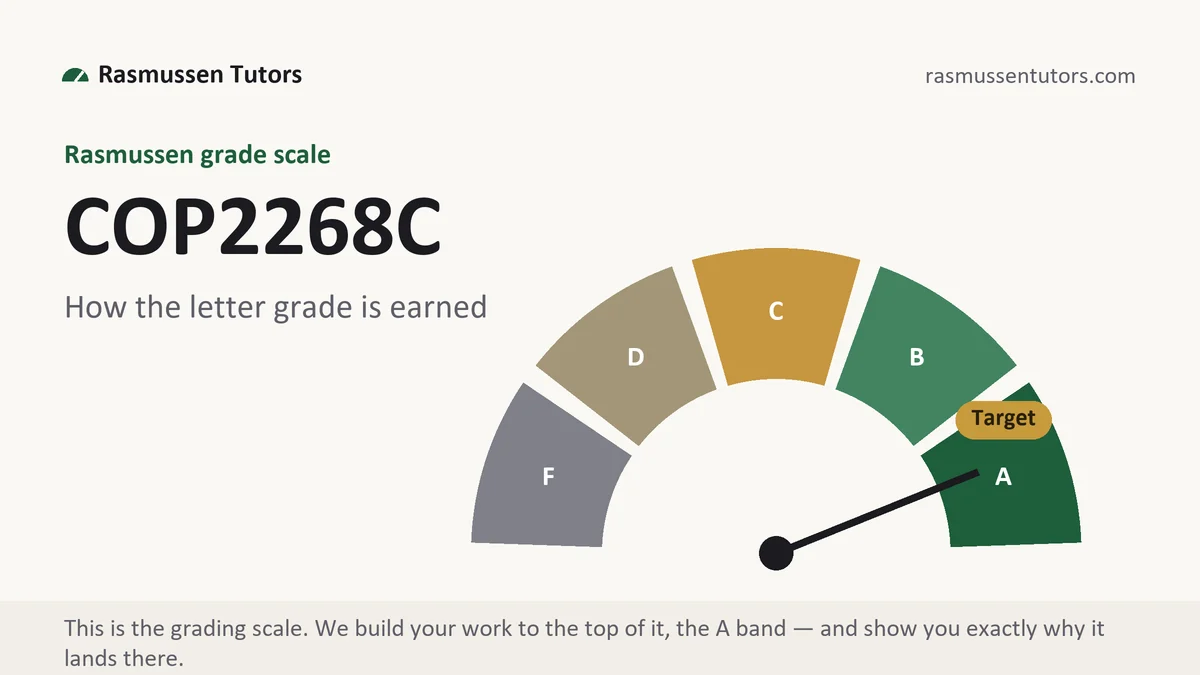
What COP2268C actually grades
Java with deliverables that run or do not: programming projects where the code is half the grade and the documentation row is where working programs still lose points.
How we help in this course
Engineers ship code that passes the spec, commented at teaching depth, with the write-up cleared row by row. The walkthrough is written so you can extend the program, which is the actual skill being sold.
The promise matches the whole site: 24 to 48 hour drafts through the eight-person pipeline with the row-by-row rubric audit, honest exam preparation where exams gate the grade, free revision until the score you need is on the record.
Deliverable manuals for this course
As COP2268C's deliverables verify against the current build, each gets a public manual here. Yours not published yet? Send the rubric in chat; the work is always available even when the manual is pending.
In COP2268C right now?
Send the rubric, and the gradebook if exams are in play. First premium sample free, back in 24 to 48 hours.
Working code that still loses the row
Java Programming grades under the Empowered Learning scale, and its classic heartbreak is specific: the program runs, the spec passes, and the project still scores a 2 because the documentation criterion was left thin. The lowest rubric row is the project's score, so comments, design explanation, and testing narrative are not garnish, they are load-bearing. A 4 requires every row at the 4 band, code and prose alike.
Engineer-drafted COP2268C projects therefore ship both layers finished: code that passes the stated spec, commented at teaching depth, plus the write-up cleared row by row against the rubric. The walkthrough is written so you can extend the program afterward, because explaining your own submission, and building on it, is the skill the course exists to certify.
Proving it on the free sample
A programming sample is the easiest kind to judge: send the current project spec and rubric, and what returns either compiles, runs, and reads clearly, or it does not. The first premium sample is free precisely because this bench prefers to be evaluated on artifacts rather than promises, and a Java project is about the most honest audition a service can volunteer for.
Logistics are the site standard, flat quote in minutes, drafts in 24 to 48 hours, the self-paced project set mapped against your 14-day activity windows so the term never stalls, and revision free until the competency score you agreed on posts. You submit everything yourself; nobody here touches a login.